

Ask any family what makes a Christmas dinner truly great and the answer is rarely the turkey. It is the roast potatoes. That first bite — shatteringly crisp outside, soft and fluffy inside, salty and rich — is the moment everyone at the table quietly fights for the crispiest one on the platter. And every home cook knows the other truth: a soggy roast potato can let the whole plate down.
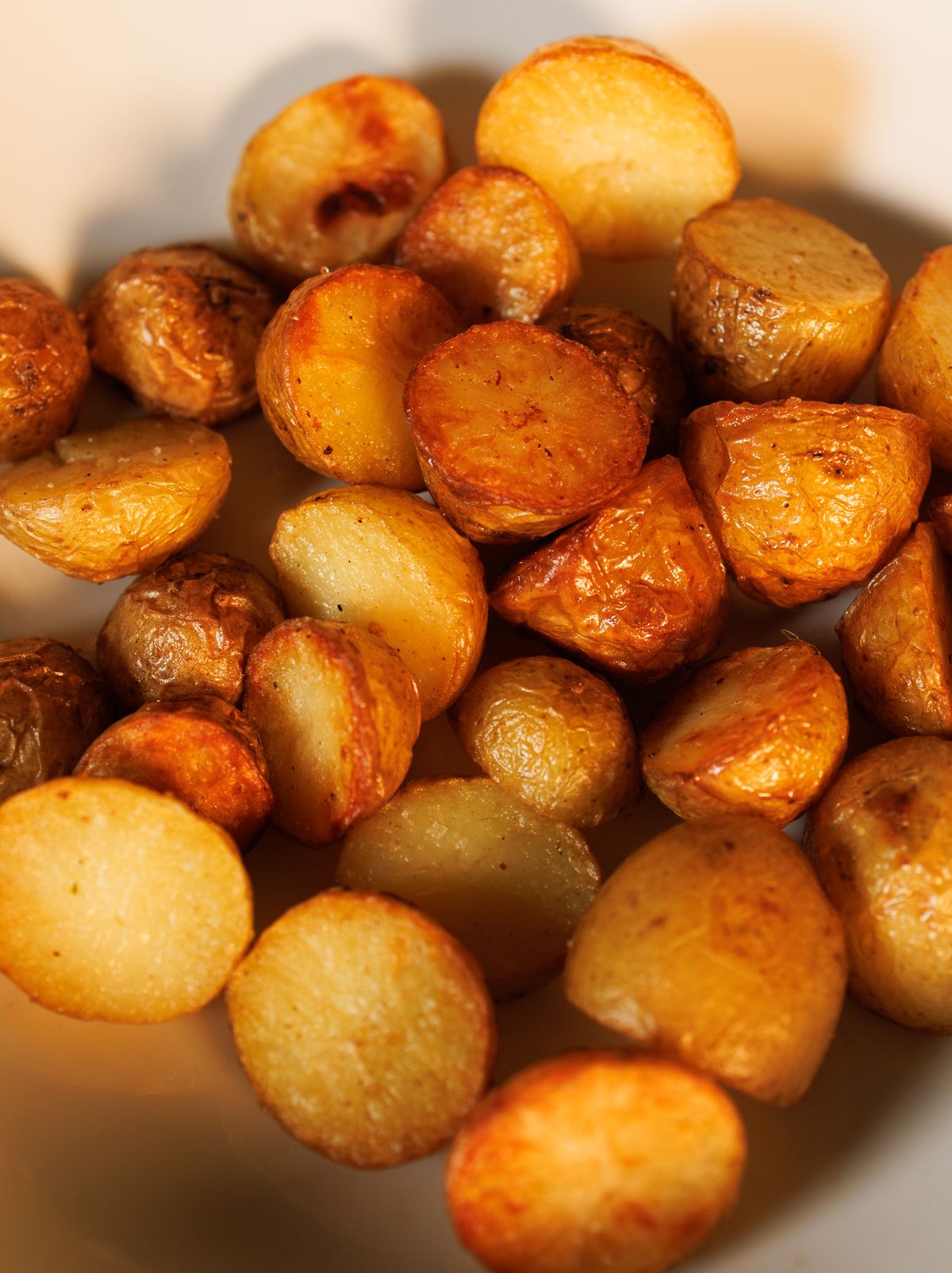
Golden, crisp and fluffy — the star of the Christmas table. Photo: Pexels
The good news is that perfect roast potatoes are not luck, and they are not some chef's secret either. They follow three simple rules: use the right floury potatoes, rough up their edges after parboiling, and drop them into properly hot fat. Master those three things and you will get that glass-crisp shell every single time — Christmas Day, Sunday roasts, and every ordinary weeknight in between.
On a traditional British Christmas table, roast potatoes sit alongside the turkey, stuffing, pigs in blankets and sprouts — and for many families they are the first thing to disappear. Goose fat is the classic choice for Christmas because it roasts at a high temperature and gives a rich, savoury flavour, but a good neutral oil works beautifully too, which makes this recipe easy to adapt for every guest at the table.
There is also a small kitchen-science trick here. A pinch of baking soda in the boiling water breaks down the surface of the potatoes, and shaking them afterwards roughs the edges into a soft, starchy coating — which turns into an extra-crisp, craggy crust in the hot fat.
The Recipe Card
| Prep Time | 15 minutes |
| Cook Time | 55 minutes |
| Total Time | 1 hour 10 minutes |
| Servings | 6 |
| Calories | About 285 kcal per serving |
| Difficulty | Easy |
| Cuisine | British |
Ingredients
| Ingredient | Amount |
|---|---|
| Floury potatoes (Maris Piper, King Edward, Russet or Yukon Gold), peeled | 2.2 lb (1 kg) |
| Goose fat, duck fat or neutral oil | Scant 1/2 cup (100 ml) |
| Baking soda | 1/2 tsp |
| Fine sea salt (for the boiling water) | 1 tbsp |
| Garlic cloves, lightly crushed | 4 |
| Fresh rosemary sprigs | 2 |
| Flaky sea salt, to finish | To taste |
| Black pepper, freshly ground | To taste |
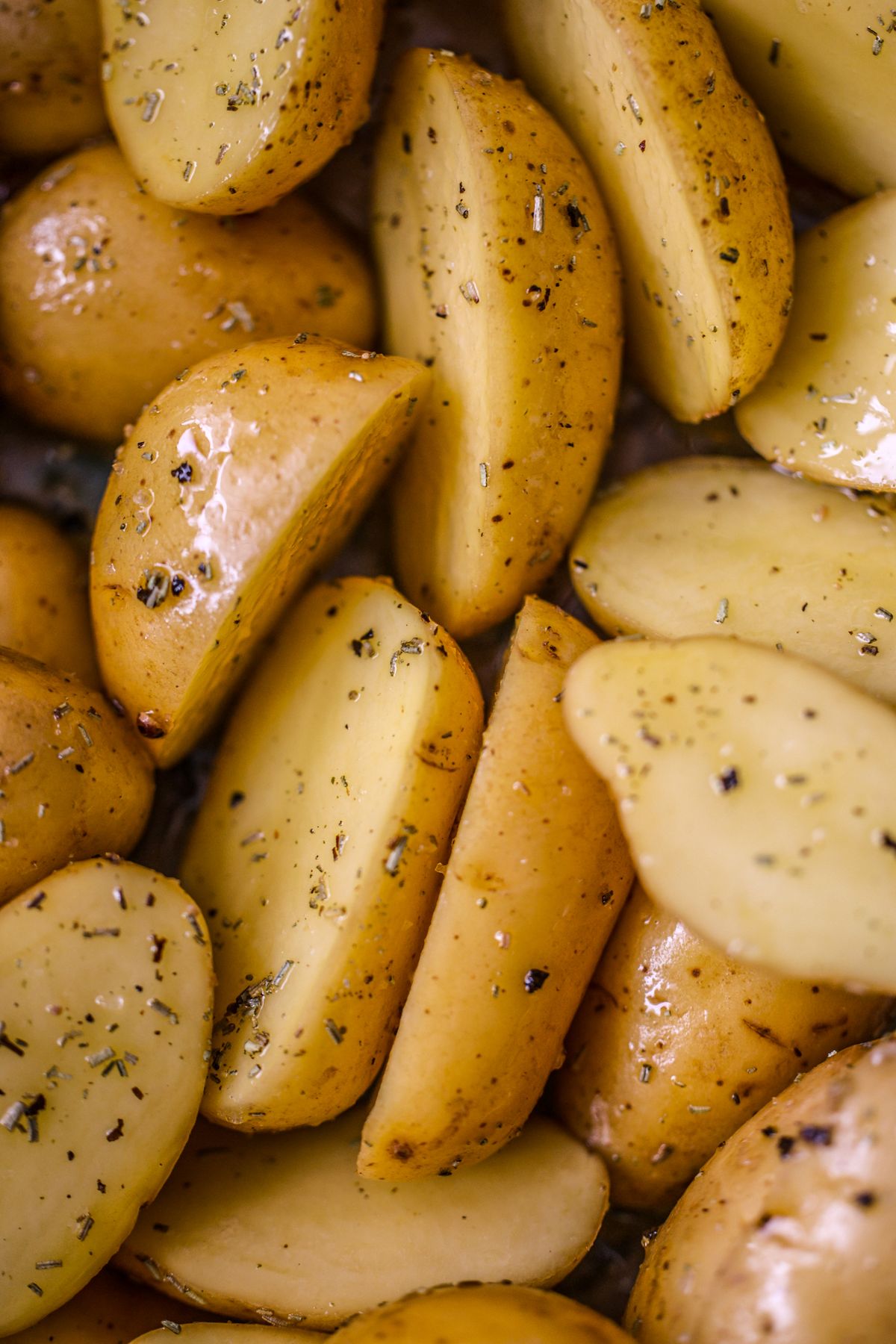
Seasoned, oiled and ready for the hot fat. Photo: Pexels
Step-By-Step Instructions
1. Heat the oven to 400°F (200°C), or 350°F (180°C) for a fan oven, Gas Mark 6. Pour the fat or oil into a large, sturdy roasting tin and put it in the oven to get properly hot — this is essential. Cold fat means steamed, pale potatoes.
2. Cut the peeled potatoes into even chunks, roughly the size of a small egg. Put them in a large pot, cover with cold water, add the salt and the baking soda, and bring to the boil.
3. Boil for 10 minutes, until the edges look soft and slightly fluffy. Drain well in a colander, then leave them to steam-dry for 2 minutes.
4. Tip the potatoes back into the empty pot, put the lid on, and shake hard a few times. The edges should look roughed-up and coated in a soft, floury layer. This is the layer that turns into the crisp crust.
5. Carefully take the hot tin out of the oven. Tip the potatoes into the fat in one layer — they should sizzle on contact. Turn each one so every side is coated, and space them apart. Crowded potatoes steam instead of roasting.
6. Roast for 50 to 60 minutes, turning them every 20 minutes, until deep golden and crisp all over. Add the crushed garlic and rosemary for the last 15 minutes so they flavour the potatoes without burning.
7. Lift the potatoes onto a warm serving dish, scatter with flaky sea salt and black pepper, and get them to the table fast. Roast potatoes wait for no one.
Pro Tips For The Crispiest Potatoes
1. The potato variety is half the battle. Floury potatoes give you the fluffy middle and rough edges. Waxy salad potatoes will never crisp the same way.
2. The fat must be hot enough to sizzle. If the potatoes do not sizzle when they land in the tin, the fat was not ready.
3. Shake harder than you think. Those roughed-up edges are where all the crunch lives.
4. One layer, with space. Use two tins if you are cooking for a crowd. It is better than one crowded tin.
5. Parboil ahead on busy days. Boil, drain and shake the potatoes in the morning, leave them uncovered in the fridge, then roast when needed. Perfect for Christmas Day.
6. Keep the skins on sometimes. For everyday dinners, unpeeled chunks roast beautifully and keep more of the fibre.
Benefits of This Dish
Potatoes have an unfair reputation, because cooked simply they are a genuinely nourishing food. A serving of roast potatoes gives you steady, slow-release energy from complex carbohydrates — exactly what a big festive meal needs. Potatoes are naturally rich in potassium, which supports healthy blood pressure and muscle function, and they provide vitamin C and vitamin B6 for the immune system and energy metabolism. Keep some skin on and you keep more of the fibre, which supports good digestion and helps you feel full and satisfied. Roasting in a measured amount of fat also uses far less oil than deep frying, and the garlic and rosemary do double duty — big flavour, plus natural plant compounds with antioxidant properties. Finally, there is the simplest benefit of all: potatoes are affordable, filling and loved by everyone from children to grandparents, which makes them the hardest-working dish on the Christmas table.
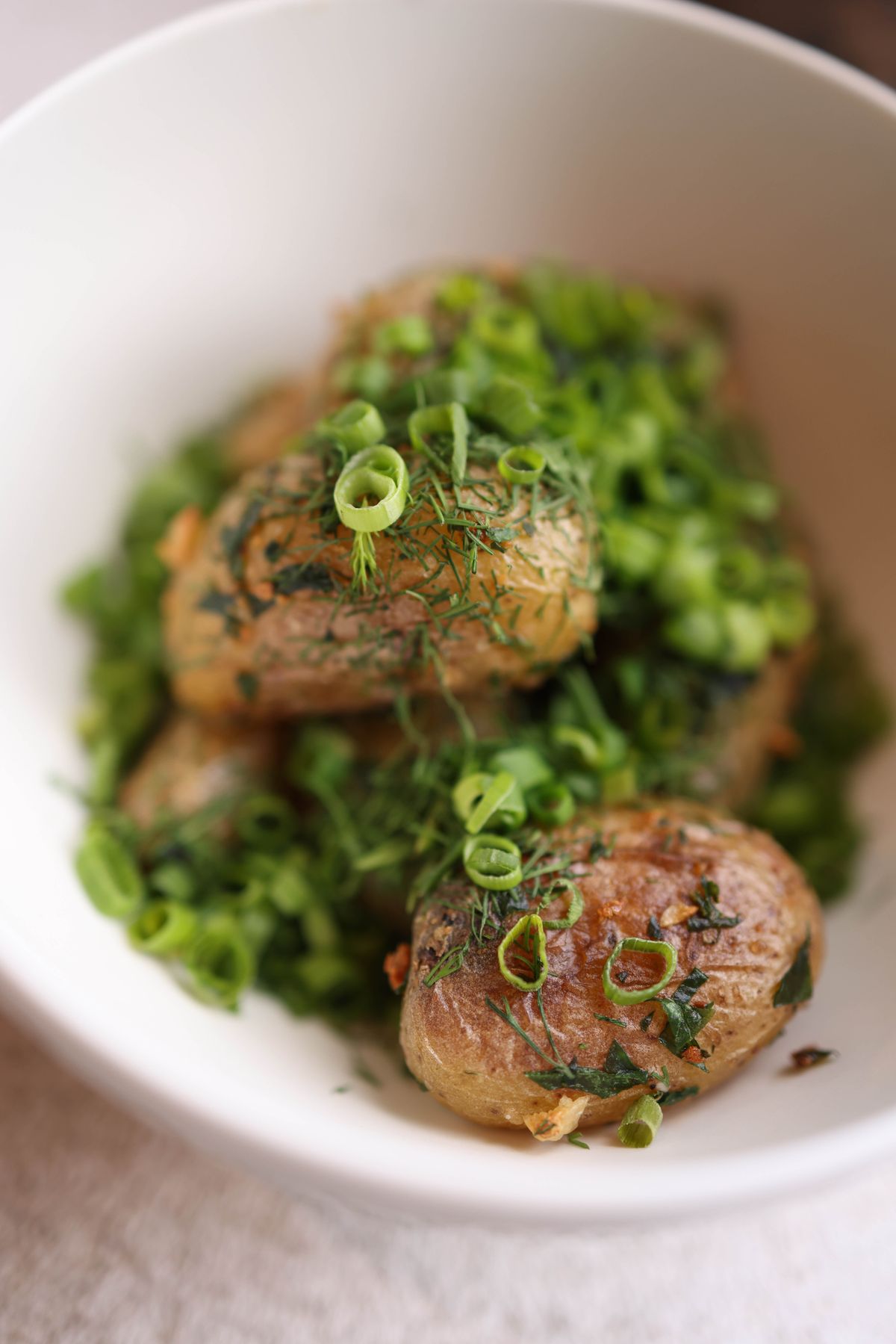
Served warm with fresh herbs for a bright finish. Photo: Pexels
Nutrition Per Serving
| Nutrient | Amount |
|---|---|
| Calories | 285 kcal |
| Protein | 4 g |
| Carbohydrates | 38 g |
| Sugars | 2 g |
| Fat | 13 g |
| Saturated Fat | 4 g |
| Fiber | 4 g |
| Sodium | 320 mg |
Nutrition values are approximate estimates per serving and can vary with ingredients and portion size.
Allergen Note And Simple Swaps
This recipe is naturally gluten-free. Made with oil instead of goose fat, it is fully vegan and dairy-free. Goose fat and duck fat are animal products, so swap to a good neutral oil for vegetarian and vegan guests. Easy variations: use sweet potato chunks for a sweeter, colour-rich version; toss the hot potatoes with grated Parmesan for a cheesy crust (adds dairy); or sprinkle smoked paprika and a pinch of chilli flakes before roasting for a gentle warmth.
Storage And Make-Ahead
Leftover roast potatoes keep in the fridge for up to 3 days. Reheat them in a hot oven at 400°F (200°C) for 10 to 15 minutes and they will crisp right back up — never the microwave, which makes them soft. They also freeze well for up to 1 month and can be reheated from frozen in a hot oven. For Christmas Day, use the parboil-ahead trick above: all the messy work done in the morning, nothing left but the roasting.
Key Takeaways
Floury potatoes, a pinch of baking soda in the water, and a proper shake in the pot are the three moves that guarantee a crisp crust. The fat must be hot, the potatoes need space, and the flaky salt goes on at the very end. Follow that, and yours will be the dish that disappears before the turkey does.
Frequently Asked Questions
Q: What are the best potatoes for roasting?
A: Floury varieties
like Maris Piper, King Edward, Russet or Yukon Gold. They go fluffy inside and
rough up at the edges, which is exactly what makes the crispiest crust.
Q: Why do I need baking soda in the water?
A: It breaks down the
surface of the potato as it boils, creating a soft, starchy layer that turns
into an extra-crisp, craggy crust in the hot fat.
Q: Can I make roast potatoes ahead of time?
A: Yes. Parboil, drain
and shake them in the morning, keep them uncovered in the fridge, and roast
when you are ready. Leftovers also reheat beautifully in a hot oven.
Q: Why did my roast potatoes come out soft instead of crispy?
A:
Almost always one of three reasons — the fat was not hot enough, the tin was
too crowded, or waxy potatoes were used. Hot fat, one layer with space, and
floury potatoes fix it every time.


