

Meghan Markle Wedding Dress Boat Neckline Trend That Changed Brides
Forever: How the Duchess of Sussex Stepped Out in Clare Waight Keller’s
Minimalist Givenchy Haute Couture Gown at Windsor Castle, Replaced Heavy
Royal Lace with Architectural Double-Bonded Silk Cady, Ignited a Global
Bridal Shift Toward Clean 1950s Bateau Silhouettes, and Redefined Modern
Luxury for Millions of Women Shopping for Timeless Wedding Dresses Around
the World Today.

The Meghan Markle wedding dress boat neckline trend that changed brides permanently shifted global bridal fashion on May 19, 2018, when the Duchess of Sussex stepped out at St. George's Chapel, Windsor Castle, in a bespoke Givenchy Haute Couture gown designed by British couturier Clare Waight Keller. By trading decades of heavy royal lace and ornate beadwork for an architectural bateau neckline (boat neck) crafted from pure white double-bonded silk cady, Meghan sparked an immediate global surge in minimalist, structured bridal wear that continues to dominate bridal ateliers today.
Key Takeaways
- The Designer & House: British designer Clare Waight Keller, the first female Artistic Director of Givenchy, created the custom haute couture gown in Paris.
- The Signature Neckline: An open bateau (boat) neckline framed the collarbones with clean, rolled-edge tailoring inspired by Audrey Hepburn's 1950s Givenchy silhouettes.
- Zero-Lace Minimalism: Constructed from double-bonded silk cady using just six structural seams, the bodice contained zero lace or beading, putting total focus on cut and proportion.
- Symbolic Contrast: A 16.5-foot (5-meter) silk tulle cathedral veil hand-embroidered with the flora of all 53 Commonwealth nations balanced the sleek gown.
- The Bridal Industry Shift: Search demand for boat-neck and plain silk wedding dresses jumped within hours of the broadcast, establishing "Quiet Luxury" as a staple in modern bridal collections.
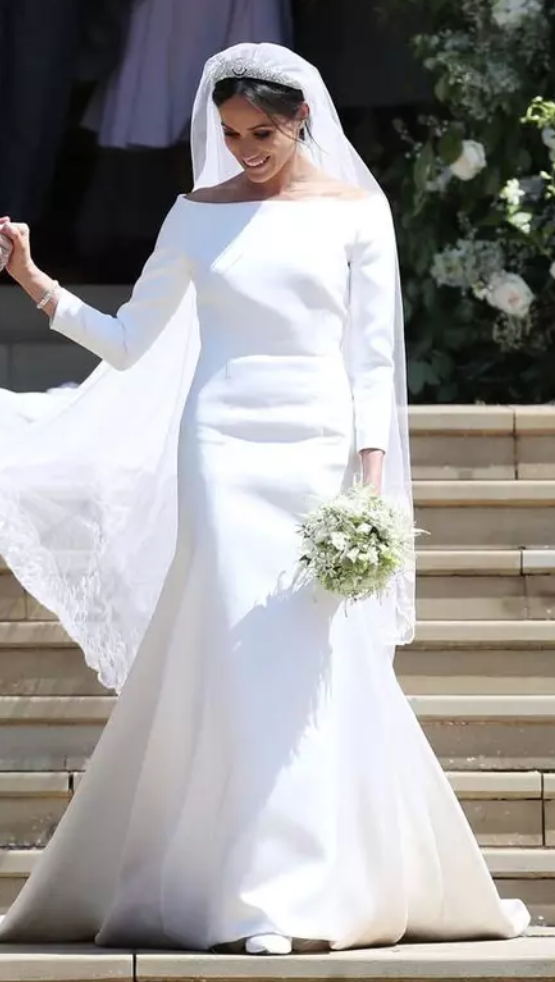 |
| Meghan Markle arriving at St. George's Chapel in her bespoke Givenchy boat-neck silk cady wedding gown. |
Why Meghan Markle's Boat Neckline Shocked Royal Fashion Watchers
Before the royal wedding at Windsor, bridal industry analysts overwhelmingly predicted that Meghan Markle would walk down the aisle in an intricately beaded, figure-hugging lace gown from houses like Erdem, Ralph & Russo, or Alexander McQueen. Seven years earlier, Kate Middleton's Alexander McQueen gown by Sarah Burton had cemented long-sleeved Chantilly lace as the gold standard for 21st-century royal brides.
Instead, the Meghan Markle wedding dress boat neckline trend that changed brides moved in the exact opposite direction. Working secretly with Clare Waight Keller in early 2018, Meghan chose an unembellished, matte-lustre double-bonded silk cady gown supported by a triple silk organza underskirt.
From a couture craftsmanship perspective, a plain silk gown is significantly harder to execute than a lace dress. Lace and appliqué naturally disguise minor seam pulls or fabric creases, whereas heavy bonded silk allows zero margin for error—every millimeter of the six-seam construction had to drape flawlessly as she walked down the nave of St. George's Chapel.

The Anatomy of the Givenchy Bateau Neckline
The defining feature of the gown was its wide, sculpted boat neckline (known in French couture as a décolleté bateau). Rather than dipping down the chest or closing tightly around the throat like a Victorian high collar, the bateau cut runs horizontally from shoulder point to shoulder point, resting right along the clavicle.

1. The Audrey Hepburn & Hubert de Givenchy Connection
The silhouette paid direct homage to Hubert de Givenchy's mid-century archives, specifically the iconic boat-neck dresses he designed for Audrey Hepburn in Sabrina (1954) and Funny Face (1957). By combining a 1950s architectural neckline with slim three-quarter-length sleeves, the dress achieved strict royal protocol coverage while highlighting the most graceful part of the upper frame: the collarbones.
2. Rolled-Edge Couture Engineering
To keep the neckline from gaping or wrinkling during movement, Givenchy's Parisian petites mains (master seamstresses) engineered a concealed internal corset and finished the upper edge with a rolled-fabric seam. This invisible structural support kept the boat neckline crisp whether Meghan was climbing the West Steps of the chapel or sitting in the royal carriage.
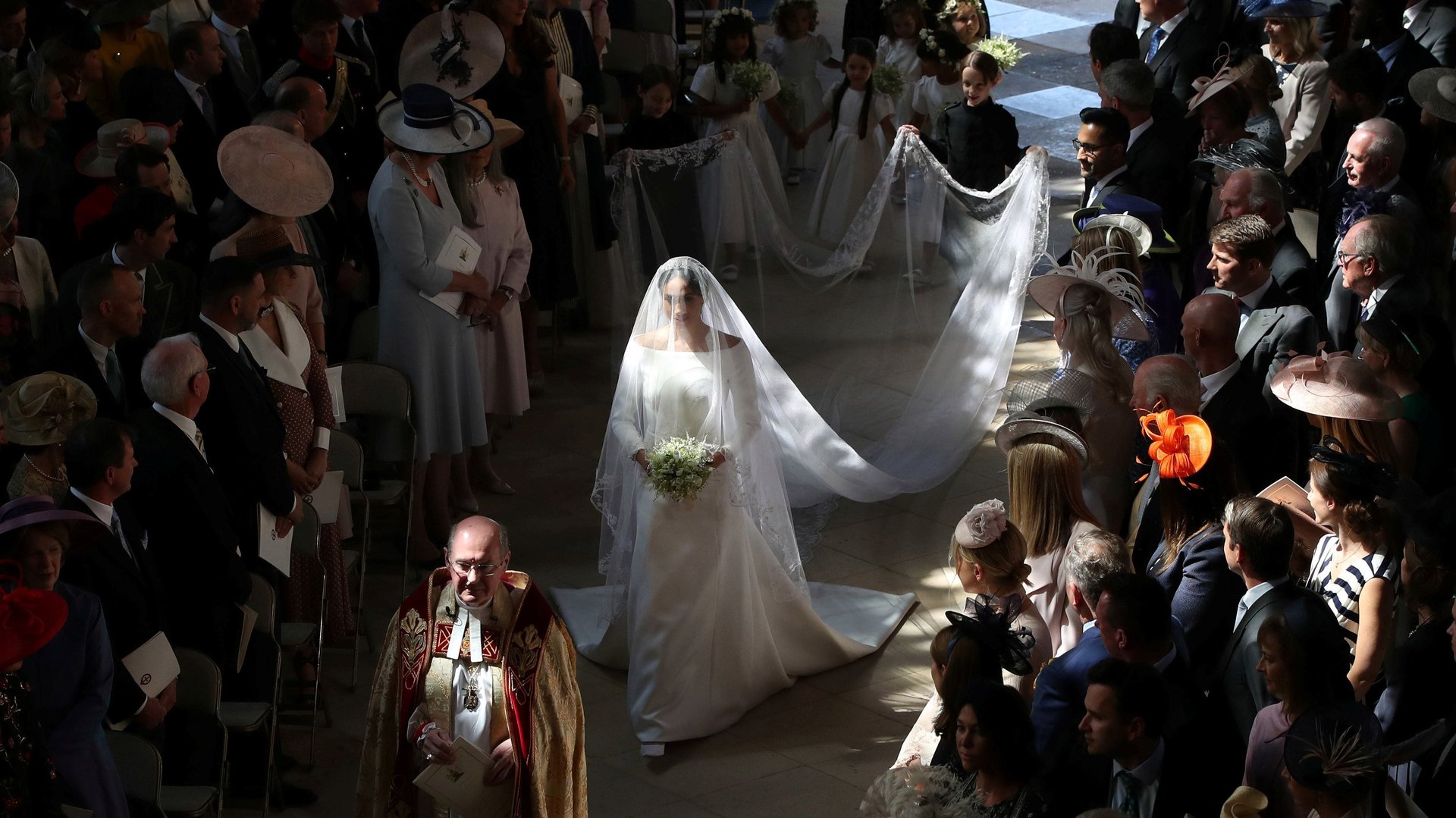 |
| The minimalist boat-neck gown acted as a sleek canvas for the 5-meter silk tulle veil embroidered with 53 Commonwealth flowers. |
How the Boat Neckline Trend Changed Brides Worldwide
Within 48 hours of the televised ceremony watched by nearly 1.9 billion people, the Meghan Markle wedding dress boat neckline trend that changed brides triggered a measurable seismic shift across both luxury bridal houses and high-street wedding retailers.
| Bridal Design Element | Pre-2018 Dominant Trend | Post-Meghan Markle Bridal Shift |
|---|---|---|
| Neckline Preference | Sweetheart, deep V-neck, & illusion lace | Structured bateau (boat) necklines & square cuts |
| Fabric Choice | Heavy floral lace, tulle & crystal beading | Clean silk cady, crepe, satin & mikado silk |
| Sleeve Styling | Strapless or sheer lace long sleeves | Tailored three-quarter sleeves in solid fabric |
| Veil Pairing | Simple tulle veil over an ornate dress | Minimalist dress paired with a statement lace-trimmed veil |
1. The Rise of "Quiet Luxury" in Bridal Boutiques
Prior to 2018, many brides associated "luxury" with the quantity of hand-sewn crystals or French lace on a bodice. Meghan's gown proved that true haute couture lies in fabric weight and tailoring. Bridal designers from Pronovias and Justin Alexander to Savannah Miller and Suzanne Neville rapidly expanded their clean silk crepe and mikado lines to meet surging bride requests for "the Meghan neckline."
2. A Universally Flattering Proportion for Modern Brides
- Balances Proportions: By widening the visual line of the shoulders, a boat neckline makes the waist appear narrower without requiring extreme corsetry.
- Timeless Photography: Unembellished silk and a classic bateau cut do not date to a specific micro-trend, ensuring wedding portraits look just as modern decades later.
- Jewelry & Veil Versatility: A clean bodice allows brides to wear heirloom statement earrings—much like Meghan's Galanterie de Cartier white gold and diamond studs—and dramatic cathedral veils without visual clutter.
Balancing Simplicity: The 53-Flower Veil and Queen Mary's Tiara
What made the Meghan Markle wedding dress boat neckline trend that changed brides work on a grand royal stage was how she styled the surrounding accessories:
- The 5-Meter Commonwealth Veil: Crafted from silk tulle, the veil required nearly 500 hours of hand-embroidery by artisans who washed their hands every 30 minutes to keep the tulle pristine. It featured a unique flower from each of the 53 Commonwealth countries, plus Wintersweet and the California Poppy honoring Meghan's birth state.
- Queen Mary's Diamond Bandeau Tiara (1932): Loaned by Queen Elizabeth II, the platinum and diamond Art Deco bandeau held the veil smoothly against her low tousled chignon without competing with the horizontal line of the boat neck.
- The Second Dress Impact: Later that evening, Meghan reinforced her minimalist bridal stamp by changing into a high-neck, lily-white silk crepe halter reception gown by Stella McCartney, further cementing clean, unembellished silk as the defining bridal look of the era.
Frequently Asked Questions (FAQs)
Who designed Meghan Markle's boat-neck wedding dress?
British designer Clare Waight Keller, then Artistic Director of the French luxury house Givenchy, designed the bespoke silk cady wedding gown and cathedral veil.
What type of fabric was used for Meghan Markle's wedding gown?
The gown was crafted from custom double-bonded silk cady, a heavyweight, structured silk fabric with a soft matte finish, layered over a triple silk organza underskirt.
Why is a boat neckline called a bateau neckline?
Bateau is the French word for "boat." The neckline follows a wide, gently curved horizontal line across the collarbone, resembling the hull of a boat, and has been a signature of French couture since the 1950s.


